Arthur’s Seat
Address: The Dasses, Holyrood Park, Edinburgh, EH8 8AZ
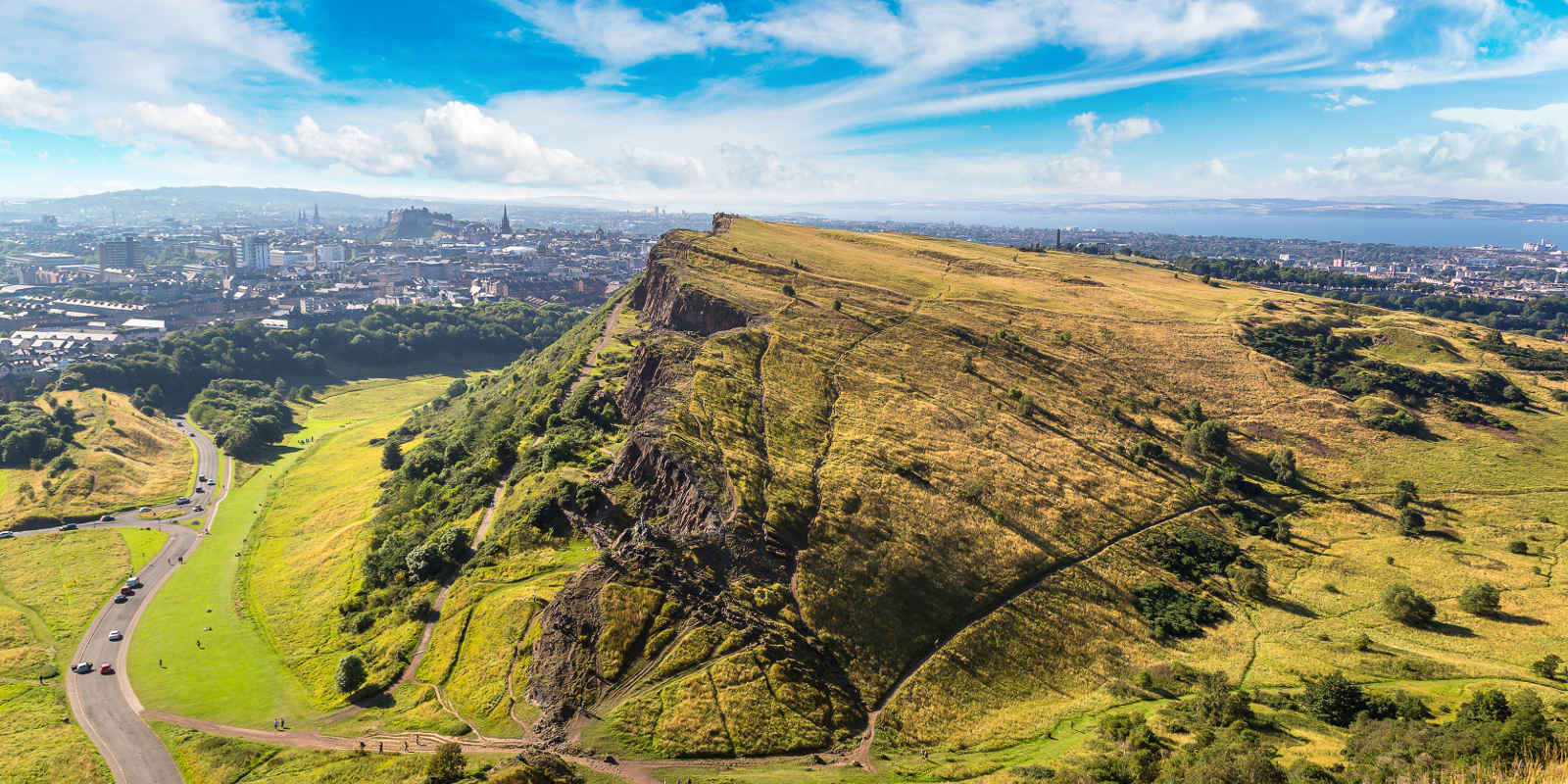
Arthur’s Seat is a highest peak in Edinburgh’s Holyrood Park. It is actually an extinct volcano, older than Edinburgh itself. Formed some 350 million years ago in a volcanic eruption, it is a site of great scientific significance. Today it is a popular hill to climb, offering panoramic city views from the top, at 251 metres above sea level. Although the rock has eroded due to glacial activity, much of the internal structure remains. The 18th century scientist James Hutton, known as the ‘Father of Modern Geology’, carried out research there, and to this day, scientists come from all over the world to study its unique geology, plants and wildlife.
There is no definitive explanation for the name Arthur’s Seat, but many ideas relate to legends surrounding King Arthur. One theory even suggests it could be a possible location for Camelot, his castle and court. Another is that it came from the Gaelic ‘Ard-na Said’ meaning ‘height of arrows’.
5 things to do on Arthur’s Seat
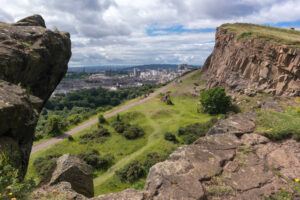
- Climb to the summit of Arthur’s Seat for amazing city views. There are many paths with varying degrees of difficulty, so even beginners should be able to reach the top without too much trouble. Check Geowalks for the best route for you.
- If you’re looking for an easier or shorter walk, there are many gentle paths around Arthur’s Seat and through Holyrood Park.
- Feed the ducks on St Margaret’s Loch, on the northern side of Arthur’s Seat.
- Find the ruins of St Anthony’s Chapel, which dates back to the early 1400s or even further.
- On a sunny day, bring along some food and drink and enjoy a picnic in dramatic surroundings.